Almost every homeowner has done it: the bathroom sink is draining slow, there's a bottle of drain cleaner under the counter, and it seems a lot easier than calling a plumber. Sometimes it even works — for a while. But after 11+ years of opening drain lines across Elk Grove Village, Schaumburg, Arlington Heights, Lombard, and the rest of the Chicagoland suburbs, we can tell you the full story the label leaves out.
In older suburban homes especially, chemical drain cleaners are one of the most common contributing factors we see behind corroded copper drains, damaged trap fittings, and repeat clogs. Here's why.
What's Actually Inside a Chemical Drain Cleaner
Most store-bought liquid and gel drain cleaners fall into three chemical families:
- Caustic (alkaline) cleaners — usually sodium hydroxide (lye) or potassium hydroxide. They turn grease into a soap-like substance and generate heat as they react. This is what most of the common gel brands are built on.
- Oxidizing cleaners — bleach (sodium hypochlorite) and peroxide-based formulas. They break down organic material by pulling electrons from it, also releasing heat and gas.
- Acid cleaners — concentrated sulfuric or hydrochloric acid. These are the most aggressive and are often labeled "professional strength." They react violently with water and can cause severe burns.
All three work by chemically attacking whatever is in the pipe. The problem is that the chemical can't tell the difference between the hair clog and the pipe holding it.
How Chemical Drain Cleaners Damage Your Pipes
Heat that sits right where you don't want it
Caustic and acid cleaners release heat as they react. When the drain is fully clogged, that hot chemical doesn't flow away — it sits in the trap and the first few feet of pipe. Plastic traps, slip-joint washers, and older solvent-welded PVC or ABS joints can soften, warp, or start leaking under that repeated heat.
Corrosion of copper and cast iron
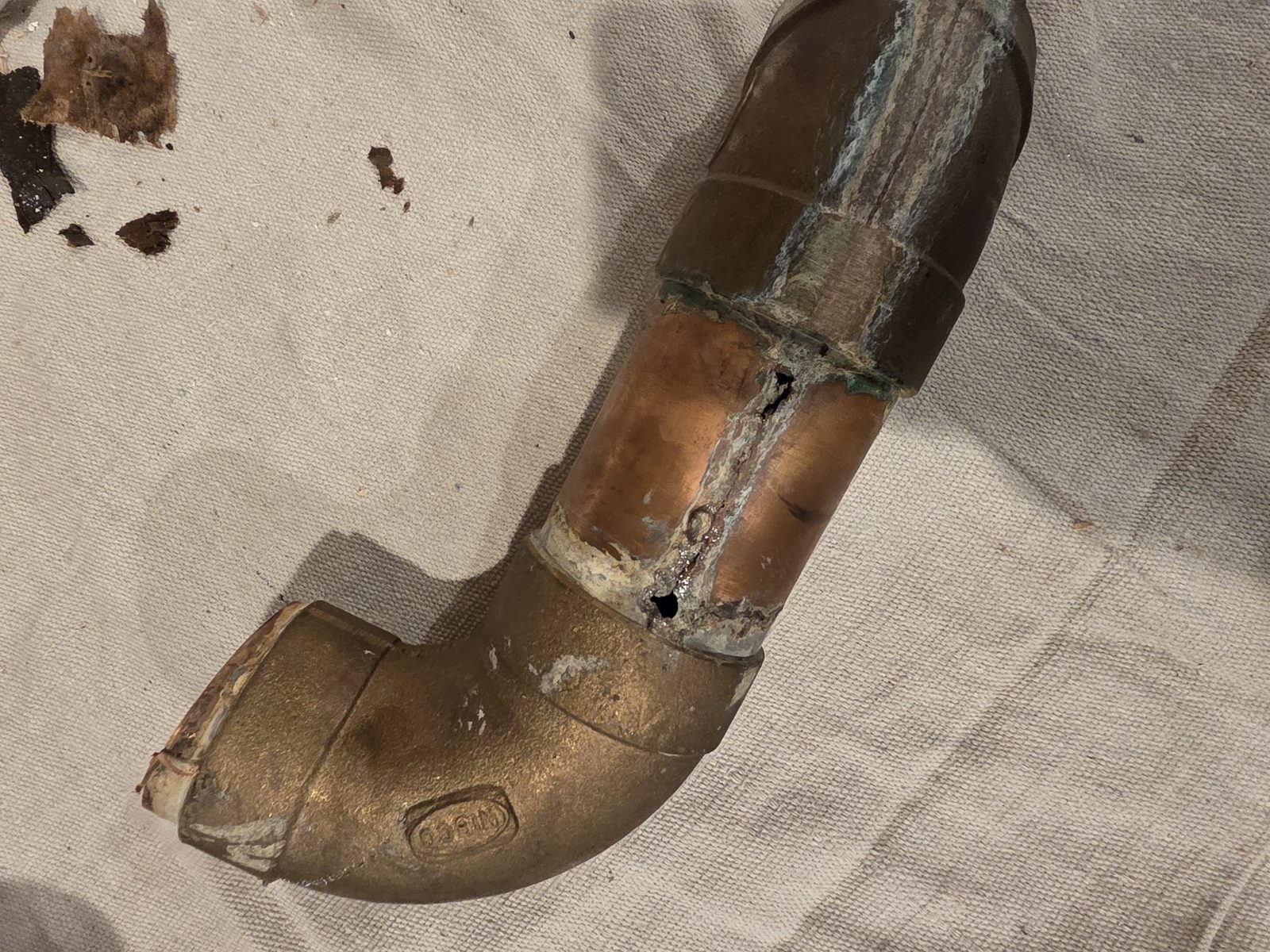
Many Chicagoland homes built from the 1950s through the 1980s have copper DWV (drain, waste, vent) piping or cast iron drains. These metals are already fighting decades of hard-water wear from the inside. Chemical cleaners accelerate that corrosion, especially on the bottom of horizontal runs where the chemical pools. That's a big reason we see pinhole leaks in copper drain lines years earlier than they should appear — we covered this in detail in our copper DWV article.
Damage to rubber, seals, and fixtures
Garbage disposal seals, rubber couplings, and fixture finishes don't hold up well to strong caustic or acid chemicals. Spill it on a chrome drain or porcelain finish and it can etch it permanently.
They often don't clear the clog — they just open a pinhole
A clog made of hair, soap scum, and grease gets a small channel burned through the middle. Water starts draining again, so it looks fixed. But the bulk of the clog is still lining the pipe, and it rebuilds faster each time. And chemicals do nothing for wipes, roots, foreign objects, or a sewer line with a belly.
The Health and Safety Risks at Home
- Chemical burns to skin and eyes from splashback, especially when plunging after pouring.
- Toxic gas when products are mixed. Bleach-based cleaners mixed with acid cleaners or ammonia can release chlorine or chloramine gas. Never use two different drain products back to back.
- Fumes in small bathrooms with poor ventilation.
- Risk to kids and pets — these are some of the most dangerous products stored in a typical home.
Are Enzyme or Bacterial Drain Cleaners Any Better?
Enzyme and bacteria-based products are much gentler on your pipes. They digest organic material slowly, over hours or days, without heat or corrosive chemistry. They're a reasonable maintenance tool for keeping a kitchen line from building up grease film. But they are not a clog remover — if the drain is already stopped, an enzyme product won't open it in any useful time frame.
Safer Ways to Clear a Slow Drain
- Clean the stopper. Bathroom sink and tub stoppers collect hair right at the top of the drain. Pulling and cleaning them fixes more slow drains than any chemical.
- Use a plastic drain-cleaning strip (the barbed zip-tie style) to pull hair out of tub and sink drains.
- Plunge correctly — cup plunger for sinks and tubs, flange plunger for toilets. Cover the overflow hole on a sink or tub so you're pushing on the clog, not out the overflow.
- Hot water and dish soap for a kitchen sink with grease buildup — not boiling water on PVC or on a porcelain toilet bowl.
- Call for professional drain rodding or hydro jetting when it keeps coming back. Mechanical cleaning removes the clog and scours the pipe wall instead of eating at it.
When a Slow Drain Is Really a Bigger Problem
One slow drain is usually a local clog. Call a professional instead of reaching for another bottle when:
- Multiple fixtures are slow or the basement floor drain backs up — that's a main line issue.
- The same drain clogs again within weeks of clearing it.
- You see water stains or drips under a sink or on a basement ceiling below a bathroom — possible pipe damage.
- You've already used chemicals and the drain is still stopped.
How We Handle Clogged Drains
- Mechanical clearing with drain rodding sized to the line, or hydro jetting when grease and scale need to be scoured off the walls.
- Camera inspection on repeat clogs and main lines so we can see the condition of the pipe — including any corrosion or damage from past chemical use.
- Honest recommendations. If the pipe is in good shape, we clear it and tell you how to keep it that way. If it's corroded or failing, we show you the footage and quote the repair firm before we start.
Drain clogging again after the bottle stopped working? Book a service call — we'll clear it mechanically and show you what's really going on in the pipe.
Chemical Drain Cleaner FAQ
Is it ever okay to use a chemical drain cleaner?
We don't recommend them. Occasional use on a newer PVC system is less likely to cause damage, but even then they rarely clear the clog fully and they create a safety hazard if the drain stays stopped. Mechanical cleaning is safer and more effective.
Can drain cleaner damage my garbage disposal?
Yes. Strong caustics and acids can attack the disposal's seals and metal components. Never pour chemical drain cleaner into a disposal.
Will drain cleaner fix a sewer backup in my basement?
No. A main sewer backup is usually caused by roots, wipes, grease, or a damaged section of pipe far from the drain you'd pour into. The chemical will just sit in the floor drain. That job needs rodding or jetting and, ideally, a camera inspection.
I already poured drain cleaner and it's still clogged. What now?
Don't plunge and don't add a different product. Ventilate the room, keep kids and pets away, and call a plumber — let them know what product you used. If you're in our service area, call (847) 306-9736.
Ready to talk water heaters?
Get a firm quote from a Level 3 Certified installer.
We'll come out, size the right unit for your family, and give you an all-in price before any wrench turns. No pressure, no surprise adders.