
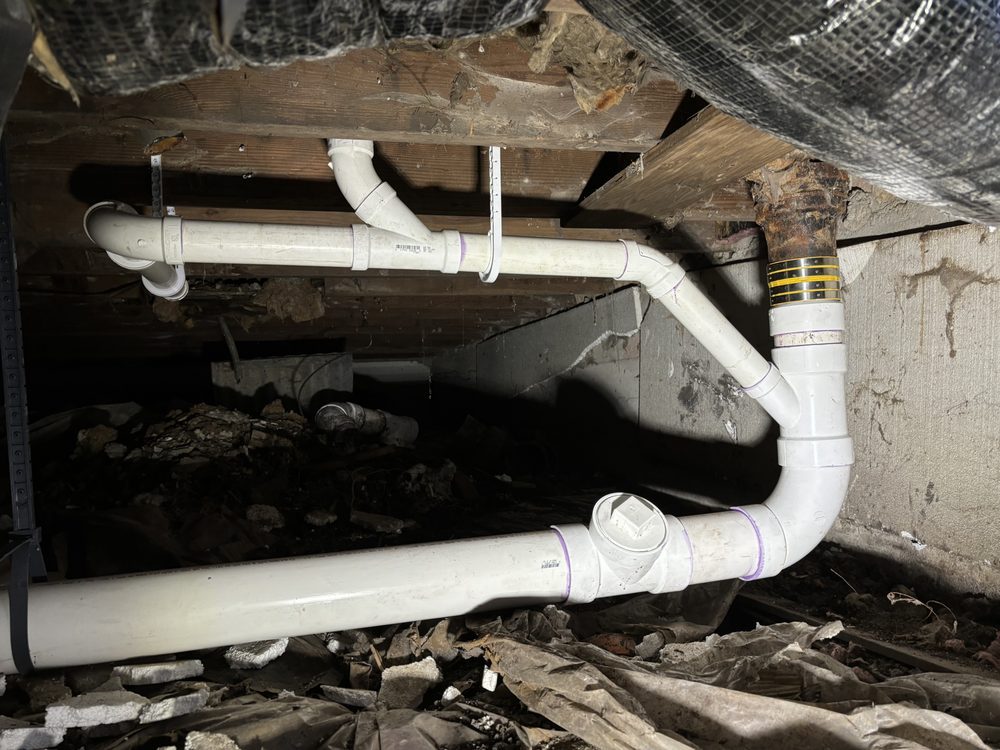
Nobody wants to think about their sewer line. It's underground, out of sight, and completely invisible until the day it isn't. Then it's suddenly the most expensive thing in your house. Over 11 years of camera-inspecting Chicagoland sewers, we've learned that the homeowners who catch a failing line early save $8,000 to $15,000 versus the ones who wait until sewage is coming up through the basement floor drain.
This is your straight-talk guide: how to know if your sewer line is failing, why Chicagoland homes are especially at risk, what replacement actually costs, and how modern trenchless methods can save your driveway and mature landscaping.
Why Chicagoland Sewer Lines Are Especially Vulnerable
Most homes in Elk Grove Village, Schaumburg, Arlington Heights, Bloomingdale, Des Plaines, and the surrounding suburbs were built between 1955 and 1985. That means the majority of active sewer laterals in our service area fall into one of three material buckets — and all three are at or past their design life:
- Clay tile (Orangeburg pattern) — used pre-1970. Original design life ~50 years. Every clay-tile sewer in Chicagoland is now at end-of-life. Common failure: root intrusion at each joint.
- Cast iron — used 1955–1985. Original design life ~50–75 years. Failure mode: interior corrosion, channeling on the bottom, eventual collapse.
- Orangeburg (bituminized fiber) — a cheap post-WWII pipe used briefly. If you have Orangeburg, replace it. It doesn't fail gracefully — it deforms into an oval and collapses.
Add in Chicagoland's freeze-thaw cycles, aggressive tree roots (looking at you, silver maples of Lombard and Wheaton), and combined sewer systems that back-pressure during heavy rains, and you have a perfect storm for premature sewer failure.
The 7 Warning Signs Your Sewer Line Is Failing
If you see one of these, get a camera inspection. If you see two, call us.
1. Recurring drain backups — especially in the basement floor drain
One backup can be a clog. Two in six months is a pattern. When multiple fixtures back up simultaneously (toilet + tub + laundry drain), the blockage is downstream of your interior plumbing — it's in the lateral line to the street.
2. Gurgling sounds when other fixtures drain
A partial obstruction in your sewer forces air to escape through other fixtures. If flushing the upstairs toilet makes the downstairs sink gurgle, air is looking for a way out.
3. Sewage smell in the basement or yard
A working sewer is a sealed sewer. If you can smell it, gas is escaping — which means water is too. A wet or sunken patch in the front yard between your house and the parkway is a classic collapsed lateral.
4. Sudden greener grass or faster-growing bushes
Sewage is a nutrient. Trees and grass over a leaking sewer line grow noticeably faster and greener than surrounding areas. It's a subtle sign we look for during camera inspections.
5. Slow drains throughout the house
Not one slow drain — every drain. Sink, tub, and toilet all draining slowly at once means the problem is downstream.
6. Foundation cracks or shifting near the sewer path
A collapsed sewer washes out the soil underneath it. In older Chicagoland homes we've seen basement floors crack directly over the sewer path — a strong indicator the lateral has failed.
7. Cast iron on your inspection report
If you're buying a home in Elk Grove Village, Des Plaines, or Arlington Heights and the inspector notes original cast iron, get a sewer camera scoped as a contingency. It'll pay for itself many times over.
What a Sewer Camera Inspection Actually Shows
We push a high-definition camera line down your cleanout or through a pulled toilet, all the way to the city main. What we're looking for:
- Root intrusion — small hair-like roots at joints (fixable with rodding/hydro jetting) versus mass root balls (replacement territory).
- Bellies and sags — sections where the pipe has sunk, holding standing water and catching debris.
- Channeling — a horizontal groove worn into the bottom of a cast iron pipe, often the last stage before collapse.
- Cracks, offsets, and separations — joints that have shifted apart, letting soil into the pipe.
- Complete failures — where the camera can't advance because the pipe has collapsed.
We give you a copy of the video regardless of what we find. That footage is worth its weight in gold if you're negotiating a home sale or filing an insurance claim.
Repair vs. Replace: How We Decide
Can be repaired (spot repair)
- One isolated crack or offset joint on an otherwise sound line
- Root intrusion at a single joint (rodding or hydro jetting, then re-scope)
- A single collapsed section on an otherwise clean line — we can dig a small pit and replace 6–15 feet
Needs full replacement
- Multiple failure points along the run
- Clay tile or Orangeburg pipe (the whole line is failing; you'll be back in 2 years)
- Severe channeling or bellies along a cast-iron line
- Root intrusion throughout — every joint is compromised
Trenchless vs. Traditional Dig-and-Replace
This is where technology has genuinely changed the game for Chicagoland homeowners.
Traditional dig-and-replace
We excavate a trench from the house to the city main, remove the old pipe, install PVC, backfill, and restore. It's the right call when the existing pipe is fully collapsed, when the run has multiple failure points, or when the run is short. Downside: your yard, driveway, and any mature landscaping in the path all get disturbed.
Trenchless CIPP (cured-in-place pipe lining)
For lines that are structurally intact but leaking at joints, we can pull a resin-saturated liner through the existing pipe and cure it in place. It creates a new pipe inside your old one. Best for older cast iron with root intrusion but no collapse — mature trees, driveways, and 90% of the yard stay untouched.
The Village Permit & Restoration Process
Every Chicagoland municipality — Elk Grove Village, Schaumburg, Lombard, Naperville, Hanover Park, Bloomingdale, Wheaton, Elmhurst — requires a plumbing permit for sewer replacement, plus a right-of-way permit if the work extends into the parkway. Here's how we handle it:
- Permits pulled before we dig. We won't start excavation without permits in hand.
- JULIE locate. All buried utilities marked before any digging.
- Inspection scheduled with the village at the right point in the job (post-excavation, pre-backfill).
- Restoration coordinated. Driveway and sidewalk cuts get replaced to code. Sod goes back in the yard.
- City-main tap coordination where required (rarely needed for lateral replacement, but sometimes on older streets).
How Long Does Sewer Replacement Take?
- Traditional dig-and-replace, no driveway — 1–2 days of active work.
- Traditional dig-and-replace under driveway/sidewalk — 2–4 days including restoration cure time.
- CIPP lining — 4–8 hours total, homeowner can typically use plumbing the same evening.
Why Chicagoland Homeowners Trust MDM With Sewer Work
- 11+ years replacing sewer lines across the northwest and west Chicago suburbs.
- In-house sewer camera — no third-party inspections, no upcharge to see what's wrong.
- Trenchless CIPP capability — we can line a structurally sound pipe without tearing up the yard when it's the right call.
- Licensed & insured — Illinois Plumbing License #055-045618. Full liability coverage on excavation.
- Firm, itemized quotes — every option priced separately so you can choose.
- Financing available through Wisetack — sewer replacement is often qualifying for 0% APR.
Concerned about your sewer line? Book a camera inspection — video is yours to keep.
Sewer Line Replacement FAQ
Is sewer line replacement covered by homeowners insurance?
Usually not — standard policies exclude gradual damage from tree roots or aging pipes. However, some carriers offer a "service line" endorsement (often $50–$100/year) that covers up to $10,000 of sewer lateral repair. If you have this rider, absolutely file. If you don't, seriously consider adding one to next year's policy renewal.
How long does a new sewer line last?
PVC and HDPE sewer lines installed today have a 75–100 year expected lifespan under normal Chicagoland conditions. You'll be handing this asset down to the next owner.
Can you replace a sewer line in winter?
Yes — we do it year-round. Frost depth in our area runs 42" and sewer laterals are buried well below that. Excavation in January is slower and more expensive because of frozen ground, but if you have raw sewage in your basement you cannot wait until spring.
Do you offer 24/7 emergency sewer service?
Yes. If you have sewage coming up through a floor drain or fixture right now, call (847) 306-9736. We prioritize sewer emergencies across Elk Grove Village, Schaumburg, Arlington Heights, Lombard, Bloomingdale, and neighboring suburbs.
Ready to talk water heaters?
Get a firm quote from a Level 3 Certified installer.
We'll come out, size the right unit for your family, and give you an all-in price before any wrench turns. No pressure, no surprise adders.