
Everything else in your plumbing system is either visible or easily accessible. The sewer lateral — the line that carries every drop of waste from your house to the city main — runs underground, under the yard, often under the driveway, sometimes under a mature tree that's been there longer than the house. You can't see it. You can't hear it working. And when it fails, it fails as sewage in your basement.
In 11+ years of camera-scoping Chicagoland sewers, we've learned that the homeowners who get proactive video inspections — and the home buyers who make one a contingency — are the ones who don't get the surprise phone call. Here's exactly what a sewer video inspection is, what it shows, and why it's the single most valuable diagnostic in residential plumbing.
What a Sewer Video Inspection Actually Is
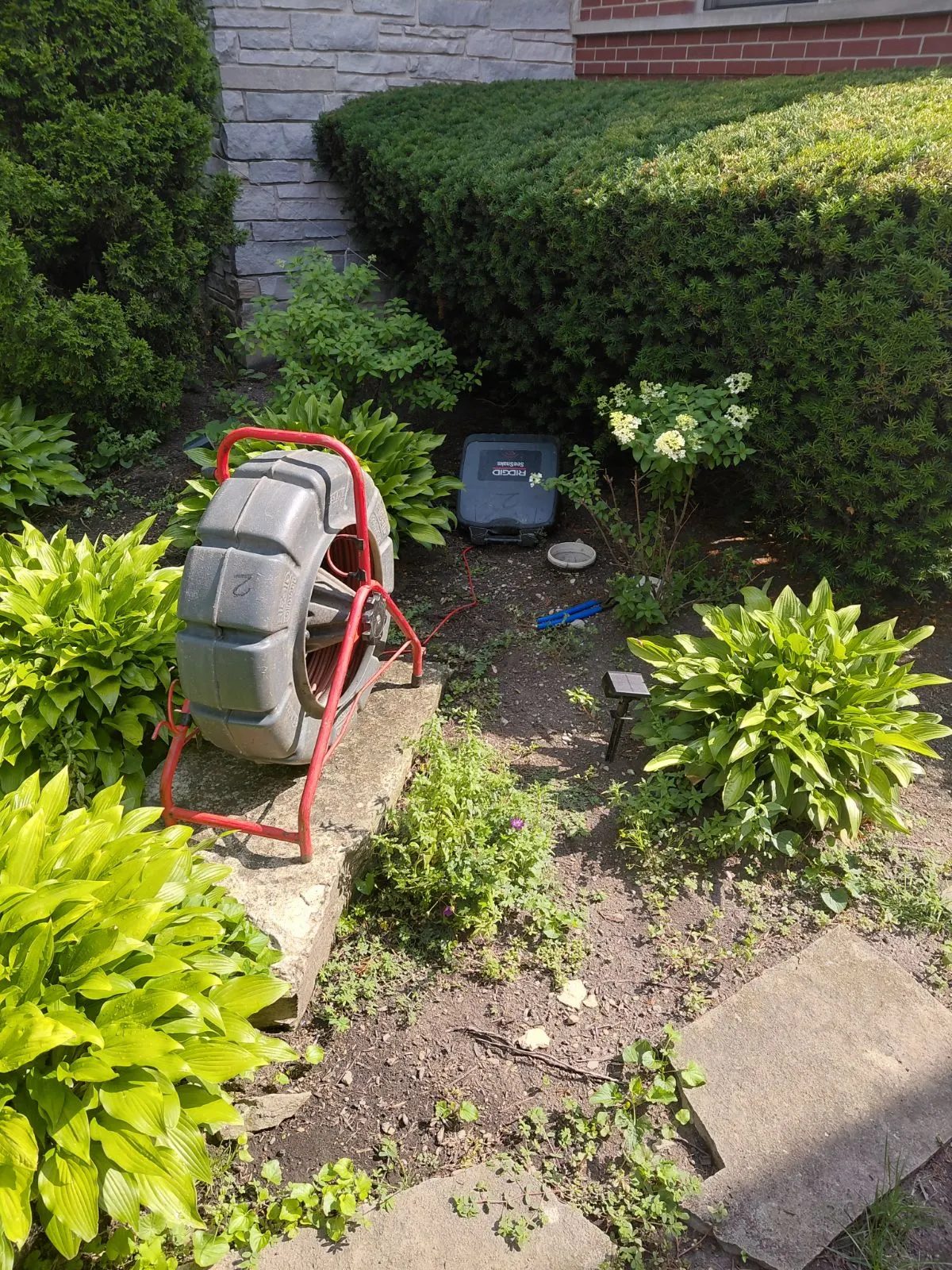
We push a self-lit, high-definition camera on a flexible cable down your sewer lateral. Access is usually through an exterior cleanout, an interior cleanout in the basement, or through a pulled toilet if there's no cleanout available. The camera transmits live video to a monitor while a separate transmitter in the head lets us locate its position and depth in the yard — so if we find a problem at 47 feet, we know exactly where above ground that is.
The process takes about 45–60 minutes on a typical residential run. What we do during that time:
- Push to the city main — or to whatever obstruction stops us short.
- Watch the pipe interior on live video for cracks, offsets, channeling, root intrusion, buildup, and standing water.
- Locate anomalies from the surface using the transmitter — so a repair or replacement can be surgical rather than exploratory.
- Record everything. The video is yours to keep, regardless of what we find.
Why Existing Chicagoland Homeowners Should Get a Scope
If your home was built before 1985 and your sewer lateral has never been camera-scoped, you're operating on assumptions. Here's what a proactive scope actually accomplishes:
1. Catch failures early, before they become emergencies
A root ball caught early is a manageable rodding or hydro jetting job. The same root ball ignored for a few more years is a collapsed line under the front yard. Sewer problems progress; they don't self-heal. Scoping every 3–5 years on an aging line lets us catch the developing problem before it's a basement full of sewage on a Sunday night.
2. Document baseline condition
Getting a baseline scope now gives you a video record of exactly what your sewer looks like in 2026. Five years from now if a problem emerges, we can compare and tell you what's new versus what's always been there. That's diagnostic gold for repair decisions.
3. Know before you finish the basement
About to invest tens of thousands on a finished basement in Elk Grove Village, Schaumburg, Lombard, or Naperville? The one plumbing repair guaranteed to disturb that finished space is a sewer lateral replacement that has to come up through the basement floor. Scope before you finish. If the line is bad, address it first.
4. Trace mysterious symptoms
Recurring basement floor drain backups, gurgling toilets, sewage smells you can't source, wet spots in the yard — these all have a story that only a camera can tell. Rodding blind is guessing. Scoping is knowing.
Pre-Purchase Sewer Inspections: The Contingency Buyers Skip and Regret
Home inspections are standard on every purchase. Sewer inspections are not standard — and they should be, especially in Chicagoland. Here's why:
The general home inspector does not scope your sewer
Standard home inspection includes visible plumbing, water pressure, drain function at fixtures, and often a look at the sewer cleanout cap. It does not include a camera down the lateral. Nothing in the inspection report tells you what's happening in the 60–120 feet of pipe between your house and the city main.
Most sewer failures are silent right up until they aren't
A collapsing clay tile sewer can drain slowly enough that you don't notice on a walkthrough. Root intrusion that will backup a basement in two years may cause no visible symptom during a 30-minute inspection. Bellied sections that hold standing water look fine when the fixtures upstairs are all off. Nothing in a normal home inspection catches these.
The seller almost never has scoped the line
In our service area, the vast majority of sellers on pre-1985 homes have never had a sewer camera inspection. If they had, and the line came back clean, they'd typically volunteer the video. Silence means "never checked" — and "never checked" on a 50–70 year-old clay tile or cast iron lateral means every failure mode we described in our earlier sewer replacement article is on the table.
What a pre-purchase scope specifically catches
- Clay tile or Orangeburg pipe — end-of-life materials that guarantee replacement within a few years.
- Severe root intrusion — often invisible from the surface until the day the toilet backs up.
- Cracked, offset, or separated joints — the beginning of the end for the line.
- Channeling in cast iron — the wall is worn on the bottom; collapse is coming.
- Bellies and sags — permanent low spots that catch waste and cause recurring backups.
- Complete collapses — the camera won't advance, and you now have a major line replacement in your negotiation before you close.
What We Look For — And What Findings Actually Mean
Root intrusion
Small hair-like roots at a single joint: manageable with periodic rodding or hydro jetting. Mass root balls at multiple joints: the pipe has separations everywhere and replacement is on the horizon. We can tell the difference on video, and we'll tell you which one you have.
Bellies and standing water
A section where the pipe has sunk and holds water even between uses. Wastewater sits, sediment settles, you get recurring slow drains and backups. Rodding doesn't fix bellies; only pipe replacement does.
Channeling (cast iron specific)
A horizontal groove worn into the bottom of a cast iron pipe over decades of solids scraping through. You'll see the camera's light play across a distinctly worn floor of the pipe with intact walls on the sides. Late-stage channeling is the pipe telling you it's on borrowed time.
Offset and separated joints
Sections of pipe that have shifted apart, letting soil into the pipe and letting wastewater out. Common in old clay tile. Fixable in isolated cases, replacement territory when widespread.
Complete failure / collapse
Camera can't advance because the pipe is no longer a pipe. Excavation and replacement is the only path forward.
"All clear"
A clean PVC or well-maintained cast iron line with no defects. Rare on pre-1980 homes, but it happens — and when it does, we tell you the truth: no work needed. Save the video for the next scope.
How We Prep and What You Should Know
- Access point matters. If your home has an accessible exterior cleanout, that's ideal. Otherwise we go through the interior cleanout or a pulled toilet. We coordinate with you before we arrive.
- We can scope with the line in service. Normal water use doesn't stop us — the camera is designed to work through wastewater.
- No trench, no excavation, no disruption. Camera inspection is non-destructive. Your yard doesn't get touched.
- Bring the video to your attorney. For pre-purchase inspections, share the video with your real estate attorney. It's the leverage for whatever comes next in the negotiation.
- We identify — we don't over-recommend. If we find nothing, we say so. If we find a problem, we quote the specific fix, and separately quote a full replacement so you have both numbers.
Why Chicagoland Homeowners and Buyers Choose MDM for Sewer Scopes
- 11+ years scoping sewer laterals across the northwest and west Chicago suburbs.
- In-house HD camera equipment with locator transmitter — no third-party inspection service, no delay in scheduling.
- Same-day and next-day availability in most of our core service area — critical for buyers on a tight contingency window.
- Full video handed over — no gatekeeping, no re-scope fees to see your own footage.
- Honest, written findings. We describe what we saw, what it means, and what (if anything) needs to happen next.
- Licensed & insured — Illinois Plumbing License #055-045618.
Buying a Chicagoland home or overdue for a scope? Book a sewer video inspection — footage is yours to keep.
Sewer Video Inspection FAQ
How long does a sewer camera inspection take?
Typically 45–60 minutes at the property, start to finish. On difficult access or a very long run, up to 90 minutes. You don't have to be present — we can meet a real estate agent, coordinate a lockbox, or work with an attorney's timing.
How often should I get my sewer inspected?
If your line is PVC and less than 25 years old: only if symptoms emerge. If it's cast iron or clay tile: every 3–5 years is reasonable insurance. Any time before finishing a basement or major renovation, regardless of pipe material or age.
Can you scope the sewer if there's an active backup?
Usually we need to clear the blockage first (rodding or jetting), then scope to see what caused it. This is the correct sequence — you rarely get useful footage of a backed-up line, and the cause of the backup is what the camera is going to tell you.
Do I need to be home for a pre-purchase scope?
No — this is a common request. We coordinate with the listing agent or seller for access, do the scope, and deliver the video and written findings to whoever the buyer designates (buyer's agent, buyer directly, or the buyer's real estate attorney).
What if you find something bad — what happens next?
We describe the finding in writing and quote both the targeted fix (if applicable) and full replacement, so you have the data to make a decision or negotiate. If it's a pre-purchase scope, that written finding is what your attorney uses to structure the seller-repair request or price adjustment.
Do you offer 24/7 emergency sewer service?
Yes — for active backups causing water damage. Camera inspections themselves are scheduled during normal business hours, but we can often get a scope out within 24 hours of a call, which matters if you're on a tight home-buying contingency clock.
Ready to talk water heaters?
Get a firm quote from a Level 3 Certified installer.
We'll come out, size the right unit for your family, and give you an all-in price before any wrench turns. No pressure, no surprise adders.