Here's a plumber's secret: a toilet is designed to handle exactly three things — human waste, urine, and toilet paper. That's the whole list. Everything else you send down the bowl has to survive a trip through your trap, your building drain, and anywhere from 40 to 150 feet of sewer lateral before it reaches the village main. In a lot of Chicagoland homes, that lateral is 50+ year-old clay tile or cast iron with root intrusion at the joints — and that's where the trouble starts.
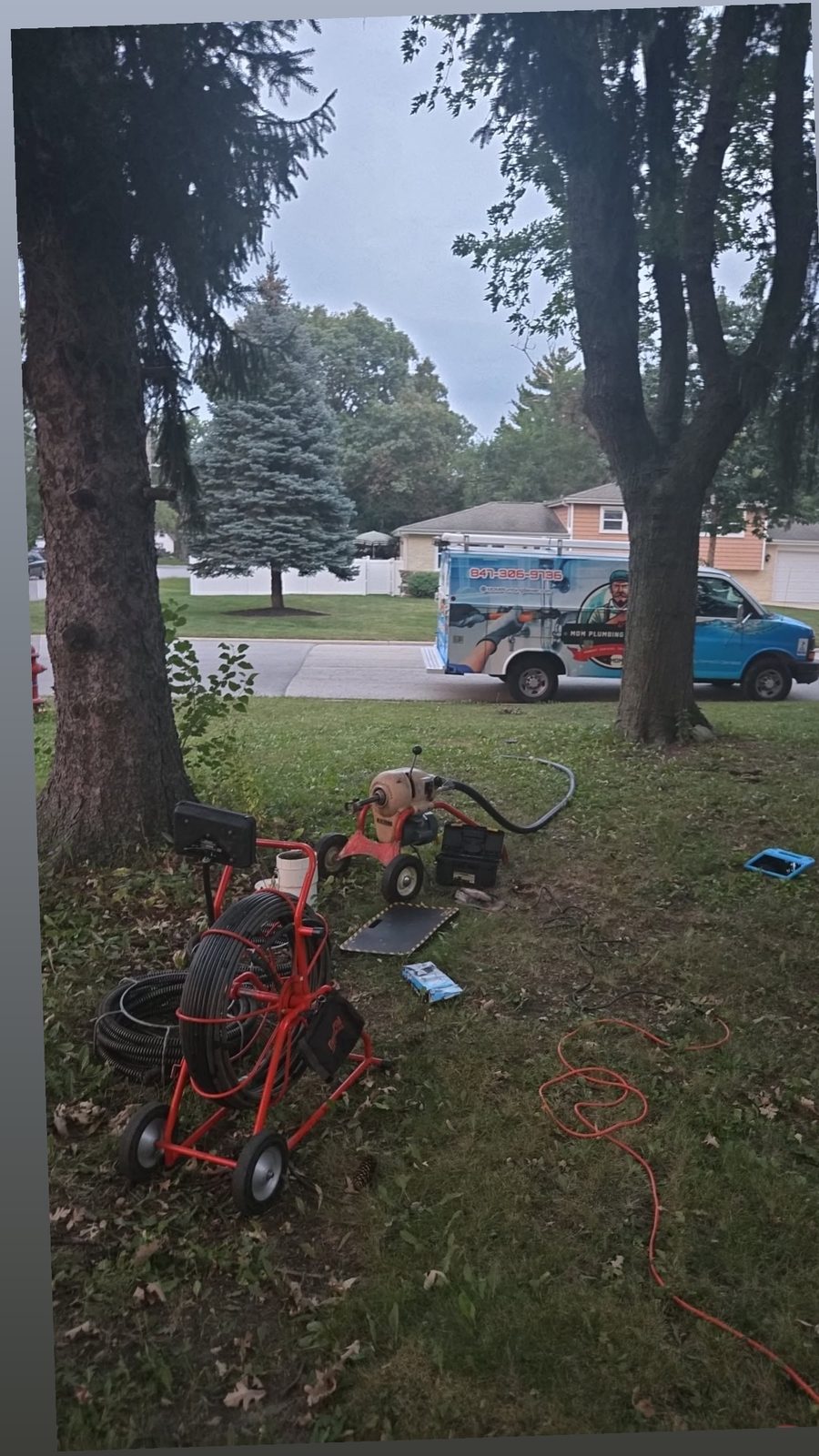
We rod and camera-inspect sewer lines across Elk Grove Village, Schaumburg, Arlington Heights, Lombard, Bloomingdale, Hanover Park, and the surrounding suburbs every week. When we pull the cable back out of a backed-up line, we see the same culprits over and over. Some of them will surprise you.
Why Chicagoland Sewer Lines Are Less Forgiving
A brand-new PVC sewer with smooth walls and perfect pitch can tolerate a surprising amount of abuse. Most suburban homes built before the 1980s don't have that. They have:
- Clay tile laterals with joints every 2–3 feet. Each joint is a place where tree roots find their way in — and where anything stringy gets snagged.
- Cast iron with interior scale and channeling. Rough interior walls grab paper and debris that would slide through smooth pipe.
- Belly sections and offset joints. Ground settling over decades creates low spots where solids sit instead of flowing.
Put one wet wipe on a root ball inside a clay joint, and the next wipe catches on the first. A few weeks later you have a dam — and the first sign is usually the basement floor drain gurgling or backing up when the washing machine drains.
The Surprising List: What You Should Never Flush
1. "Flushable" wipes
This is the number one thing we pull out of clogged Chicagoland sewer lines, and it isn't close. "Flushable" only means the wipe will physically leave the bowl. It does not mean it breaks down the way toilet paper does. Toilet paper starts falling apart in water within seconds; most wipes stay intact for hours or days — long enough to wrap around a root, a joint, or the cable of the last plumber who rodded your line. Baby wipes, makeup wipes, disinfecting wipes, and "flushable" moist towelettes all go in the trash.
2. Facial tissues and paper towels
They look like toilet paper, so people assume they behave like toilet paper. They don't. Facial tissues and paper towels are engineered to hold together when wet — that's the entire point of the product. In the drain, that wet strength becomes a clog.
3. Dental floss
Floss doesn't dissolve, and it's essentially a tiny net. It wraps around anything it touches and then catches everything that comes after it. A few months of flossing over the toilet and you've built a mesh that holds paper in place.
4. Cotton swabs, cotton balls, and makeup pads
Cotton doesn't break down in water — it clumps. Swabs get caught at bends and trap arms, and cotton balls collect in the low spots of an older lateral.
5. Feminine hygiene products
Tampons, applicators, and pads are designed to absorb liquid and expand. They're one of the most common items we find lodged in the toilet's internal trapway and in the building drain right below the bathroom. Wrap and trash, every time — even if the box says flushable.
6. Hair
Hair is incredibly strong and doesn't dissolve. Flushing a hairbrush cleanout seems harmless, but hair binds with paper and grease into a rope that's hard to cut out.
7. Cat litter — even "flushable" litter
Clumping litter is literally designed to form solid masses when it gets wet. Inside a sewer lateral, it does exactly that. Even the plant-based "flushable" brands add a lot of solids to a line that wasn't designed for them, and many wastewater agencies discourage flushing cat waste at all.
8. Cooking grease and food
Some people dump grease or leftovers into the toilet to keep them out of the kitchen sink. The sewer doesn't care which fixture it came from. Grease cools, solidifies on the pipe walls, and becomes the sticky layer that every wipe and paper wad grabs onto.
9. Medications
Old prescriptions won't usually clog your line, but they pass through treatment plants and into waterways. Use a pharmacy or police-station drug take-back drop box instead. Many Chicagoland villages host take-back days throughout the year.
10. Bandages, contact lenses, condoms, and cigarette butts
Small, non-biodegradable, and often plastic or latex. Individually they slip through; collectively they're a big part of the debris we pull off a rodding cable.
11. Diapers and "flushable" diaper liners
A diaper can absorb many times its weight in water. A single one is enough to stop a toilet cold, and if it makes it past the bowl, it can block the building drain completely.
Warning Signs Something Is Building Up in Your Sewer
- The toilet is slow to empty or needs a second flush more often than it used to.
- Gurgling from the toilet or tub when you run the sink or washing machine.
- The basement floor drain backs up when the washer drains — the classic sign of a main sewer restriction.
- More than one fixture is slow at the same time. One slow drain is a local clog. Several slow drains point to the main line.
- Sewer odor in the basement or near floor drains.
What to Do When the Toilet Backs Up
- Stop flushing. A second flush on a clogged toilet is how bathroom floors get flooded. If the bowl is rising, lift the tank lid and push the flapper closed, then turn off the toilet's angle stop valve behind the bowl.
- Use the right plunger. A flange (bell-shaped) plunger seals into a toilet outlet. The flat cup plunger is for sinks.
- Skip the chemical drain cleaner. It rarely clears a toilet clog, can damage the bowl's wax ring and your drain piping, and creates a hazard for whoever has to open the line next.
- If other fixtures are backing up too, stop using water. That's a main-line problem, and every load of laundry or shower adds more water with nowhere to go.
How We Clear (and Prevent) Repeat Clogs
When a toilet or main line keeps clogging, we don't just punch a hole and leave. Our process:
- Clear the line with the right tool for the job — a closet auger for the toilet, sewer rodding or hydro jetting for the main.
- Camera-inspect the sewer so you can see exactly what caused the backup: roots, wipes, a belly, a cracked joint, or a combination.
- Give you a straight answer — whether this is a maintenance issue, a repair, or a sign the line is near the end of its life. If repair makes sense, we'll talk through options including spot repairs and CIPP lining.
- Quote firm before any work starts. No surprises.
Toilet clogging again, or floor drain backing up when the washer runs? Book a service call — we'll clear it, camera the line, and show you exactly what's going on.
Flushing FAQ
Are flushable wipes really safe for my plumbing?
No. They may clear the toilet, but they don't break down quickly enough to be safe for older Chicagoland sewer laterals or municipal systems. We pull them out of clogged lines constantly.
Is thick or "ultra-plush" toilet paper a problem?
It can be in homes with older or root-compromised lines, and in low-flow toilets. If your toilet clogs regularly, try a thinner paper that breaks apart quickly — drop a few squares in a jar of water and shake it to see how fast it falls apart.
My toilet clogs every few weeks. Is the toilet the problem?
Sometimes — an older or poorly designed toilet with a narrow trapway can clog easily. But repeat clogs are also a classic early warning of a main sewer restriction. A camera inspection tells you which one it is.
Do you handle emergency sewer backups?
Yes. If sewage is coming up through a floor drain or fixture right now, call (847) 306-9736. We prioritize backups across Elk Grove Village, Schaumburg, Arlington Heights, Lombard, Bloomingdale, Hanover Park, and neighboring suburbs.
Ready to talk water heaters?
Get a firm quote from a Level 3 Certified installer.
We'll come out, size the right unit for your family, and give you an all-in price before any wrench turns. No pressure, no surprise adders.